
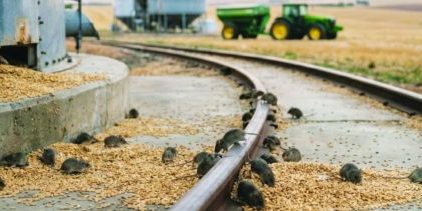
ABOVE: Rodent outbreaks can create major biosecurity, feed contamination and infrastructure risks for intensive livestock operations.
AUSTRALIAN producers are being urged to remain vigilant as severe mouse activity continues across key agricultural regions, particularly in Western and central Australia, with experts warning the economic and operational impacts extend well beyond grain production. For poultry farmers and pork producers, the current mouse surge is a timely reminder of the importance of integrated rodent management across feed storage, sheds, silos, manure areas and production facilities, particularly as cooler weather approaches and rodents seek shelter and food sources around intensive livestock operations.
Mouse numbers well above plague levels
Landholders in parts of Western Australia, including Northampton, Mullewa and Ravensthorpe, have reported mouse densities exceeding 8000 mice per hectare in recent months. Mouse plagues are typically declared at levels above 5000 mice per hectare, although CSIRO research indicates economic damage can begin at populations as low as 200 mice per hectare.
The outbreak has prompted strong industry advocacy for access to more effective control tools, with the Australian Pesticides and Veterinary Medicines Authority now approving emergency access to higher-strength zinc phosphide bait (ZP50) for grain producers. Previously, most producers only had access to lower-dose ZP25 bait, which many growers argued was failing to adequately suppress rapidly increasing populations.
Grain Producers Australia research, development and extension spokesperson Andrew Weidemann said the situation had become critical for many farming businesses. “There’s no sugar-coating it – it’s an absolute emergency right at the moment for growers with mice,” he said. “This is another kick in the guts… there’s no doubt about it.” Adding that there had been a number of distressful calls received in recent weeks, which had “been a bit gut-wrenching to be honest, and we’re doing our level best.”
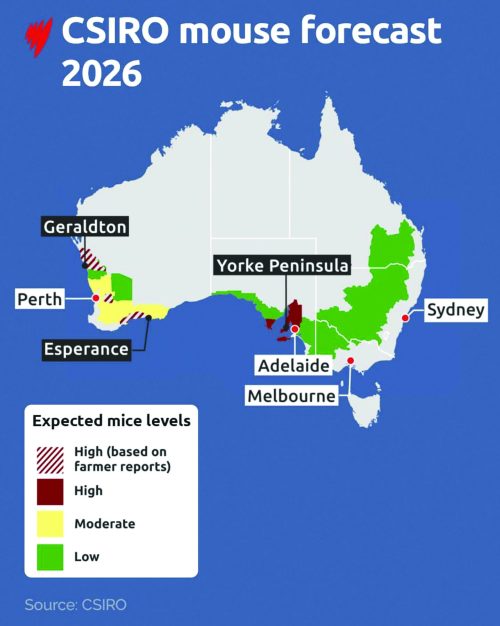
CSIRO data shows the current outbreaks are centred around southern SA and southwest WA
Why the situation matters to livestock producers
While much of the immediate focus has been on grain crop losses, rodent outbreaks can create major biosecurity, feed contamination and infrastructure risks for intensive livestock operations. Mice can contaminate feed supplies, damage electrical systems and insulation, spread disease organisms and create animal welfare concerns inside sheds and storage areas. Egg farms, poultry sheds and piggery facilities are particularly vulnerable because of abundant feed sources and warm shelter.
The CSIRO website states changing farming systems and seasonal conditions may be contributing to more persistent mouse problems across Australia. “Current farming systems may inadvertently contribute to the increased prevalence of high mouse populations, providing the right conditions, like shelter and food, for mice to survive year-round.” Researchers said no-till farming systems, while beneficial for soil conservation, can leave heavy stubble and crop residues that provide ideal shelter and food for rodents.
Rapid breeding drives explosive population growth
CSIRO researchers warn that mice are capable of reproducing extremely quickly under favourable conditions. “Mice are prolific breeders. They can give birth to a litter of up to 10 offspring every 20 days, and they can fall pregnant as soon as they have given birth.” Experts say populations can increase six-fold in as little as three weeks when food and shelter are abundant.
CSIRO research officer Steve Henry described the impacts of mouse plagues as deeply disruptive for farming families and rural communities. “Unlike other problems, like a drought, you can close the door and turn on the air conditioner to get away from it for a little while,” he said. “With a mouse plague when you go inside and you go to the cupboard to get something to eat there are mice there. You go to the linen press to get a towel, there’s mice in the linen press. You go and get your clothes out of your drawer, there’s mice in the drawers. When you go to bed at night, they’re running across the bed. These sort of impacts are really difficult to quantify, but they’re really profound.”
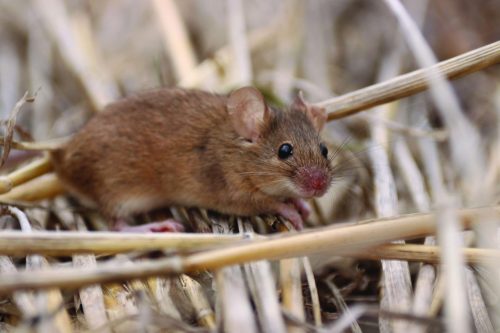
No-till farming systems can leave heavy stubble and crop residues that provide ideal shelter and food for rodents.
Stronger baits expected to improve control
CSIRO research has supported the move to stronger bait formulations, with trials showing significantly improved efficacy from the higher-dose product. “Our research shows that with the 50g bait, it killed over 80 percent of the mice 80 percent of the time… the 25g bait killed over 80 percent of the mice only 20 percent of the time,” Mr Henry said. “The reason we started doing our research was that farmers were telling us that they would apply the bait and it wouldn’t work, and then they would apply it again. In some instances, we were hearing of three or four applications of the 25g bait.”
The APVMA said the emergency permit was approved under strict safety and environmental standards. APVMA chief executive Scott Hansen said: “This prioritisation does not mean taking shortcuts in examination of the product and the way in which it is proposed to be used, including its potential impacts on human health, wildlife and the environment.”
Western Australia Agriculture and Food Minister Jackie Jarvis said the decision would provide practical support for affected communities. “I’m pleased this decision will provide a way forward for landholders and communities to undertake effective mice control,” she said. “The State Government is also supporting affected communities with additional funding to local government for baits and clean up measures to help alleviate the cost and stress of dealing with this issue.”
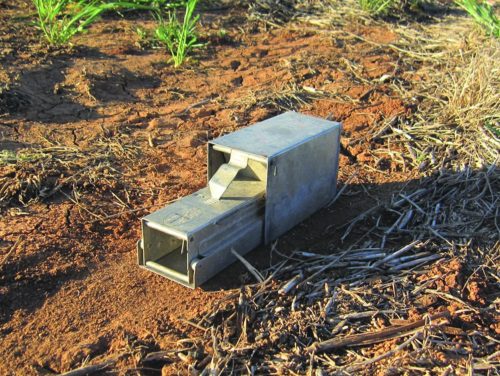
Routine monitoring around feed storage, silos, poultry sheds and pig facilities can help prevent infestations escalating.
Early detection remains critical
The CSIRO website states surveillance and early intervention remain among the most important tools available to producers across all agricultural sectors. “Preventing mouse plagues and their devastating effects on Australian crops starts with appropriate practices and precautions for minimising food availability to mice.” Recommending the monitoring of populations at least two months prior to sowing in grain systems. The same principle applies to intensive livestock operations, where routine monitoring around feed storage, silos, poultry sheds and pig facilities can help prevent infestations escalating.
The Department of Primary Industries and Regional Development said conditions this season have made control particularly difficult. DPIRD deputy director general Cec McConnell said: “Mice control has been extremely challenging this season, which is particularly concerning now crops are emerging, and ZP50 baits will be another tool to help landholders to get on top of this issue at a crucial time.”
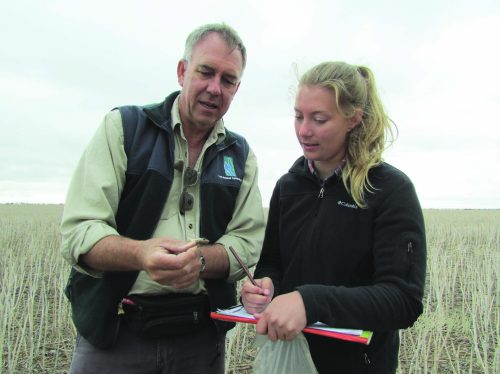
CSIRO mouse researchers process a captured mouse in the field. Photo: Sharyn Watt
Safety remains important during clean-up
Authorities are also reminding producers and rural residents to follow appropriate hygiene precautions when handling dead mice or cleaning contaminated areas. Recommendations include wearing disposable gloves, closed footwear, long sleeves and face masks when handling rodents, sealing carcasses before disposal, washing hands thoroughly and carefully disinfecting surfaces contaminated with droppings or urine. With mouse activity remaining high across several agricultural regions, producers across both cropping and livestock sectors are being encouraged to review rodent management plans, monitor feed and storage areas closely and act early before populations escalate further.