
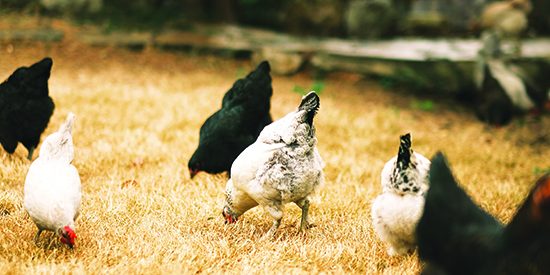
ABOVE: Moving entirely from the existing production mix to free range and organic systems could increase greenhouse gas emissions by 60 percent and almost double the amount of land required.
A WHOLESALE shift to free range and organic egg production could increase greenhouse gas emissions by 60 percent and almost double land use, according to research from the University of Oxford.
The findings highlight the environmental trade-offs that can emerge as egg producers and markets move towards cage-free production systems – an issue that is also relevant to Australian poultry producers facing growing expectations around animal welfare, sustainability and production efficiency.
Published in Royal Society Open Science, the study examined several possible scenarios for the egg industry in the United Kingdom, including transitions to barn, free range and organic systems, while keeping total egg production constant.
The researchers found that moving entirely from the existing production mix to free range and organic systems could increase greenhouse gas emissions by 60 percent and almost double the amount of land required. A key factor was the need for larger laying-hen populations in some cage free systems to maintain the same level of egg production.
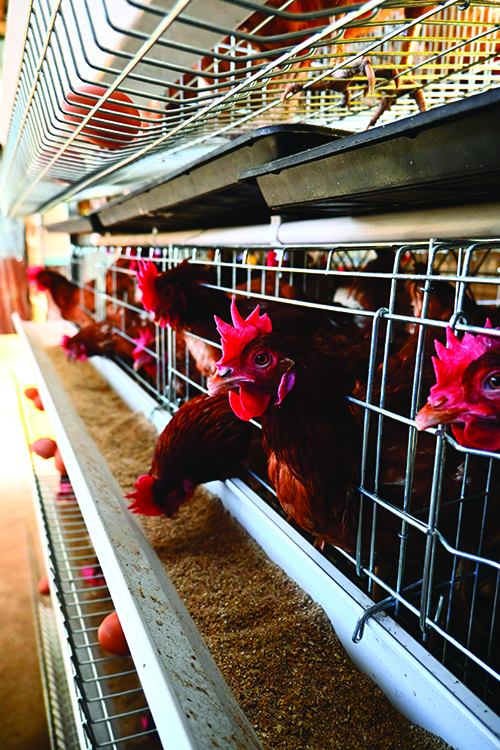
The findings reinforce the importance of looking beyond individual sustainability measures and considering how changes to production systems affect productivity, feed use, land requirements, mortality and overall environmental performance.
The study also found a significant increase in hen mortality under 100 percent free range and organic scenarios. The researchers concluded that moving away from cages without simultaneous improvements in mortality rates and feed efficiency could increase the environmental footprint of egg production.
For Australian poultry producers, the findings reinforce the importance of looking beyond individual sustainability measures and considering how changes to production systems affect productivity, feed use, land requirements, mortality and overall environmental performance.
University of Oxford’s Smith School of Enterprise and the Environment senior research associate in sustainable food solutions Dr Harriet Bartlett said animal welfare, environmental impacts and food production needed to be considered together.
“Our research highlights the importance of considering animal welfare, environmental impact and food production together when shaping the future of egg farming,” she said. “Being aware of these tricky trade-offs will help us make better decisions for the environment and animal welfare in the future.”

Dr Harriet Bartlett
The research comes as global egg production has expanded significantly over the past five decades, increasing the importance of understanding its environmental footprint. The study notes that the global food supply chain accounts for about 26 percent of human-caused greenhouse gas emissions, while also contributing significantly to eutrophication and terrestrial acidification.
However, the Oxford researchers stressed that the findings should not be interpreted as an argument for returning to caged production.
“This is not to say concerns around eggs from caged chickens can or should be dismissed or that we should return to restrictive caged systems,” Dr Bartlett said. “But we want farms and consumers to be aware of all the potential impacts when it comes to the methods by which we produce our food. By taking a broader view, we can find the best ways to balance these trade-offs as we pursue a more sustainable global food system.”
The researchers acknowledged an important limitation of the study – much of the underlying UK production data was collected in 2009-10. That means the analysis does not reflect improvements made in laying-hen genetics, nutrition, housing, health, management and feed efficiency over the past 15 years. The authors nevertheless said the dataset remained the most comprehensive available for comparing UK laying-hen production systems.
For Australia’s egg industry, the study provides another reminder that production-system changes can involve complex trade-offs. Improving hen welfare while maintaining efficient feed conversion, low mortality and high productivity will be critical to limiting the environmental impacts of future changes to egg production systems.